Español (Spanish)
Your cart
There are no more items in your cart

 INDOOR LAMP
 OUTDOOR LAMP
 SMART HOME
 DECORATION
 FURNITURE
 Fans
Fans APPLIANCES
 HEATING
 LED BULBS
 STAYS
STAYS STYLES
 ACCESSORIES
 BRANDS
 OUTLET %
 NEWS
NEWS PROMOCIONES
 Idioma:
English GB (English)
Idioma:
English GB (English)
 Contacto
 Favoritos
 Formas de pago y envío


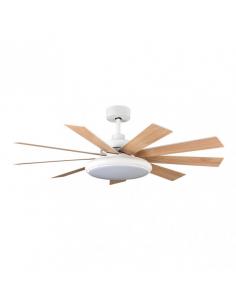
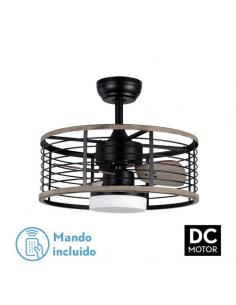
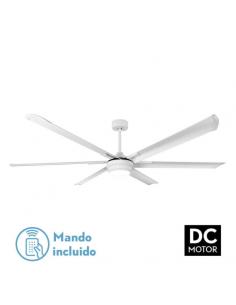
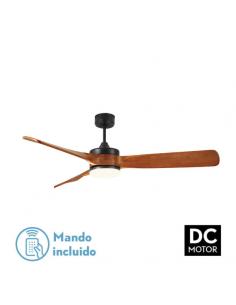
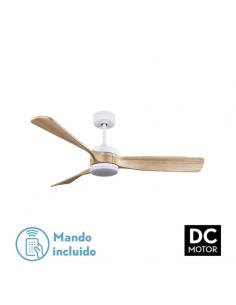
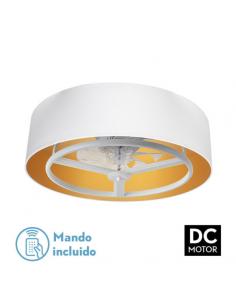
Ceiling fans are the most economical option to cool your room in summer or heat it in winter. Thanks to technological advances, fans have become functional design elements.
Before choosing a fan, there are certain features that you should consider to select the one that best suits your needs.
What size fan do I need?
It is very important that we buy a fan that adapts to the dimensions of the room where we are going to install it, because if we buy one that is too small we could have the feeling that it does not generate enough air and does not fulfill its function.
Below is an approximate guide to the dimensions that a fan should have depending on the m2 of the room.
Rooms of 13 m2 or less: for this type of room we need a fan that has a maximum diameter of 107 cm.
Rooms between 13 and 18 m2: for this type of room we need fans from 107 and 132 centimeters in diameter.
Rooms between 18 and 28 m2: for this type of room we need fans from 127 and 132 centimeters in diameter.
Rooms of 28 m2 or more: we would need fans of at least 165 centimeters in diameter.
Quiet, energy-efficient fans
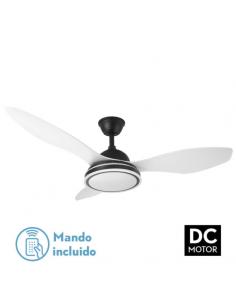
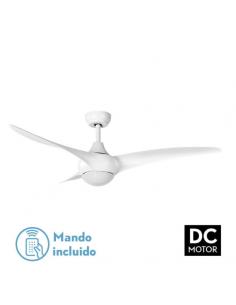
The quietest fans are those that use a direct current (DC) motor, and they can consume up to 70% less energy.
Another of the most outstanding features is that they have a reverse function and are usually much faster when it comes to starting up or changing speed.
Winter fans
If you are looking for a winter fan you need it to have a reverse function. The blades will rotate clockwise and cause cold air to stay on top and hot air on the bottom.
Winter fans can be used in conjunction with heating to increase their effectiveness. You will have the feeling that the room is warmer with less power.
When buying a ceiling fan you should take into account a number of aspects:
To install a ceiling fan, you need to have the optimal ground clearance and take into account the dimensions of the room.
At Luzeco we recommend that the minimum distance between the blades of a ceiling fan and the floor is 2.3 m, although for safety reasons it is best to place it at least 2.4 m. In this sense, we have fans specially designed for use in low ceilings.
Although it depends on the fan, there are low-power fans that begin to be less effective if we exceed the distance of 2.7 m.
In any case, for each of our fans we indicate the size of the room for which it is most suitable.
The main differences have to do with noise and the amount of air they generate.
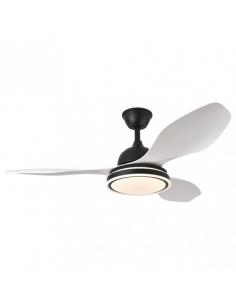
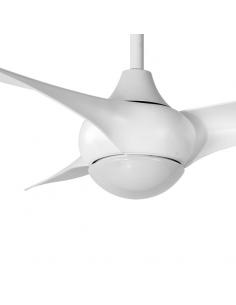
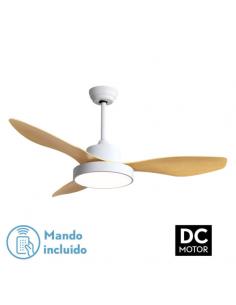
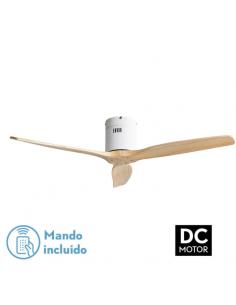
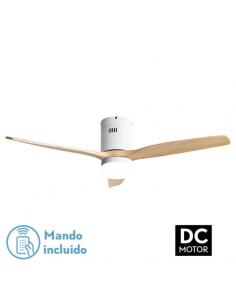
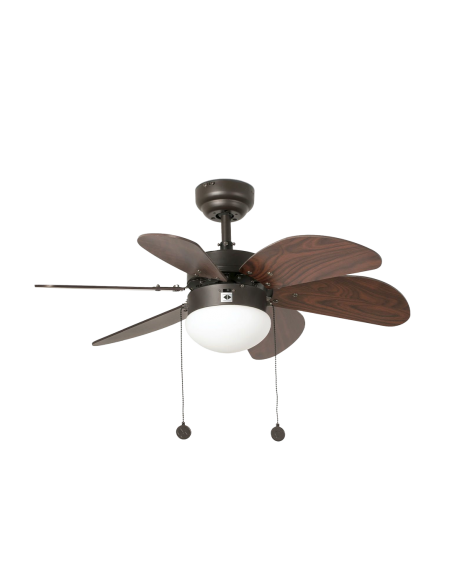
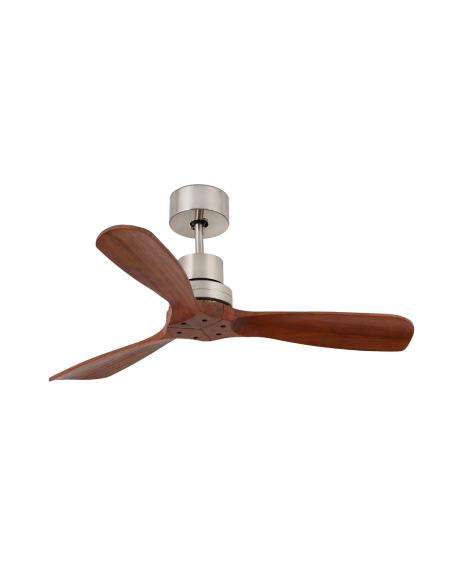
3-blade fans move faster, as they are lighter and the motor does not need as much effort, so they will displace more air. In addition, the noise they generate is somewhat less.
The motor of 5-blade fans has to work harder to mobilize them, although the amount of air it displaces is almost the same.
If you are looking for a fan that moves more air, you should pay attention to the information regarding the revolutions per minute (rpm) or the number of cubic meters per hour (m3/h) that it is capable of moving.
This information can be found in the product details and in the technical sheet.